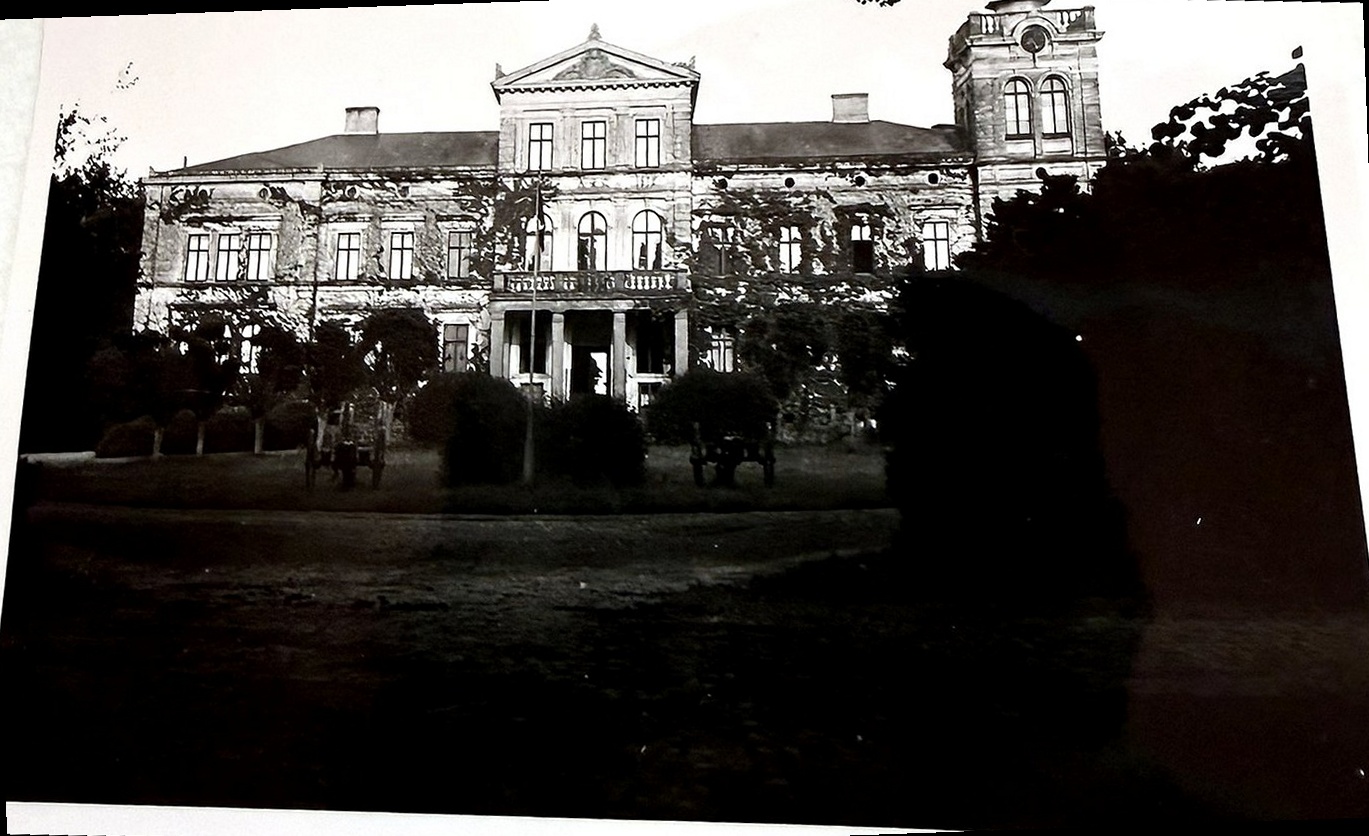
Anyone approaching the imposing manor house along Parkstraße in Gültz today can hardly guess what stories these walls could tell. Schloss Gültz – built between 1868 and 1872, with 99 rooms across 2,278 square metres, set in a landscape park designed by Peter Joseph Lenné – is one of the most important manor houses in Mecklenburg-Western Pomerania. Its history reaches back well over 500 years.
The von Maltzahn family – a Pomeranian noble dynasty since 1194
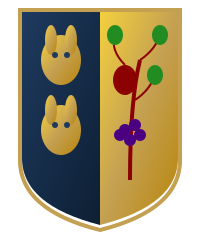
The history of Schloss Gültz is inseparably linked with the von Maltzahn family – one of the oldest noble families in Pomerania, first mentioned in records in 1194. From 1496 the Gültz estate was a knightly possession of the von Maltzahns. Only between 1569 and 1646 did the von Preen family interrupt this era of almost 450 years.
The Gültz estate lies between Altentreptow and Demmin and today belongs to Mecklenburg-Western Pomerania – historically, however, the region is part of Western Pomerania: initially Swedish after the Peace of Westphalia in 1648, the area south of the Peene passed to Prussia in 1720 and from 1815 belonged to the Prussian Province of Pomerania (Demmin district).
Helmuth von Maltzahn – builder and Secretary of State of the Imperial Treasury
Helmuth Freiherr von Maltzahn-Gültz (1840–1923) had the present manor house built between 1868 and 1872 to plans by the Schwerin building officer Georg Daniel. The building combines northern Italian villa architecture with Prussian historicism – a mix of styles that was rare in northern Germany at the time.
Helmuth von Maltzahn was far more than a landowner: he served as Secretary of State of the Imperial Treasury, was a confidant of Otto von Bismarck and became Oberpräsident (Governor) of the Province of Pomerania. His work is documented in detail in the Pommersche Lebensbilder, vol. II (Stettin 1936, pp. 266–280).
The manor house – architecture in detail
Georg Daniel designed a late neoclassical manor house with 99 rooms spread over five floors. The striking north-west tower is reminiscent of an Italian campanile. In the entrance hall, two columns support an ornate coffered ceiling. A spiral staircase leads to the upper floor.
The heart of the house is the Mirror Hall: 156 square metres with a ceiling height of 6.80 metres, sky-blue stucco, gilded mirrors and chandeliers – a ballroom that has been the setting for celebrations for more than 150 years.
The foundations were built of fieldstone. In 1868 three glacial boulders were split for the side walls and window sills of the basement. The largest came from a sand pit west of Gültz and measured a massive 12 × 14 × 16 feet – a volume of around 43 cubic metres.
Axel von Maltzahn – district administrator, ministry official, Wagner enthusiast
Helmuth was succeeded as lord of the manor by his son Axel von Maltzahn (1868–1931). Axel served as Landrat (district administrator) in Grimmen and later as a ministry official – during the First World War he worked in wartime food administration. In private life he was an ardent Wagner enthusiast and a mathematician; his finely crafted bookplate still bears witness to his love of art and science.
Helmuth the Younger – his stance towards the National Socialists
Axel’s eldest son Helmuth von Maltzahn (1900–1984) farmed Hermannshöh from 1925, took over the entire estate after his father’s death in 1931, and moved to Gültz with his family in 1940. As a student in Munich he witnessed the Hitler Putsch of 1923 at close quarters – for him the beginning of a lifelong rejection of National Socialism. He never joined a party:
When a group of party supporters hoisted the swastika flag at Hermannshöh against his will, he had the flagpole fenced in and, with a sign, transferred ownership of the fenced-off area “to the Reich”. To force him to give up land for settlement, the Reich bought up a claim of 200,000 Reichsmarks against the estates – he settled it through extensive timber felling. Because the authorities hardly allocated the estates any crude oil for the tractors any more, he converted the farm to 32 draught oxen. After 20 July 1944 he was arrested and held in Gestapo custody in Greifswald until 17 September 1944.
His mother refused the National Socialists’ “Mother’s Cross” with the words: “I will not be awarded a prize like a breeding sow.”
At the end of the war, the lime tree beside the Gültz church, thought to be 700 years old, fell in a storm – like an evil omen. Helmuth von Maltzahn was taken prisoner by the Soviets in February 1945 and returned in 1948; he later lived in Holstein and died in 1984. After reunification, he and his wife were laid to rest in the family burial ground in Gültz.
Expropriation, looting and the GDR vocational school
After the Second World War, the Maltzahns were expropriated in the course of the land reform. The manor was looted and thereafter used as the “Georg Ewald” company vocational school, which was under the authority of the Altentreptow district council.
From 1980 to 1988 an extensive refurbishment was carried out with the involvement of the Neubrandenburg Office for Town and Village Planning and the district monument protection authority. Unique original files from this refurbishment phase – minutes, official correspondence, colour schemes and historical photographs – are held by Schloss Gültz and were shown publicly for the first time in 2025. More in the post on the GDR building files.
After reunification – hotel, vacancy, new beginning
A further refurbishment followed in 1999; for a short time the building operated as a hotel, but it closed after a few years. The manor house then stood largely empty.
In 2019 the Projektentwicklungsgesellschaft Schloss Gültz UG acquired the property at a compulsory auction. Since then, the registered listed monument has been developed step by step as an events venue and a living monument – a task for generations, driven forward with great dedication and the support of journeyman craftsmen, conservationists and enthusiasts.
Schloss Gültz today – a monument with a future
Today the Mirror Hall is once again used for concerts, weddings and cultural events. In the historic Lenné park, glamping is offered during the season from May to October. The manor is a supporting member of the association Schlösser, Guts- und Herrenhäuser Mecklenburg-Vorpommern e.V. (Baltic Manors) and regularly opens its doors for the MittsommerRemise. A friends’ association is being founded – anyone who would like to get involved is welcome.
The history of Schloss Gültz has not yet been fully written – it is being continued every day.
Visit Schloss Gültz: Parkstraße 12, 17089 Gültz, Mecklenburg-Western Pomerania. Contact and directions.