
Axel Freiherr von Maltzahn (1868–1931) was the eldest son of Helmuth von Maltzahn, who built the manor, and succeeded him as lord of Gültz. A curriculum vitae from within the family makes it possible to trace the stages of his life; we reproduce them here in brief.
Origins and education
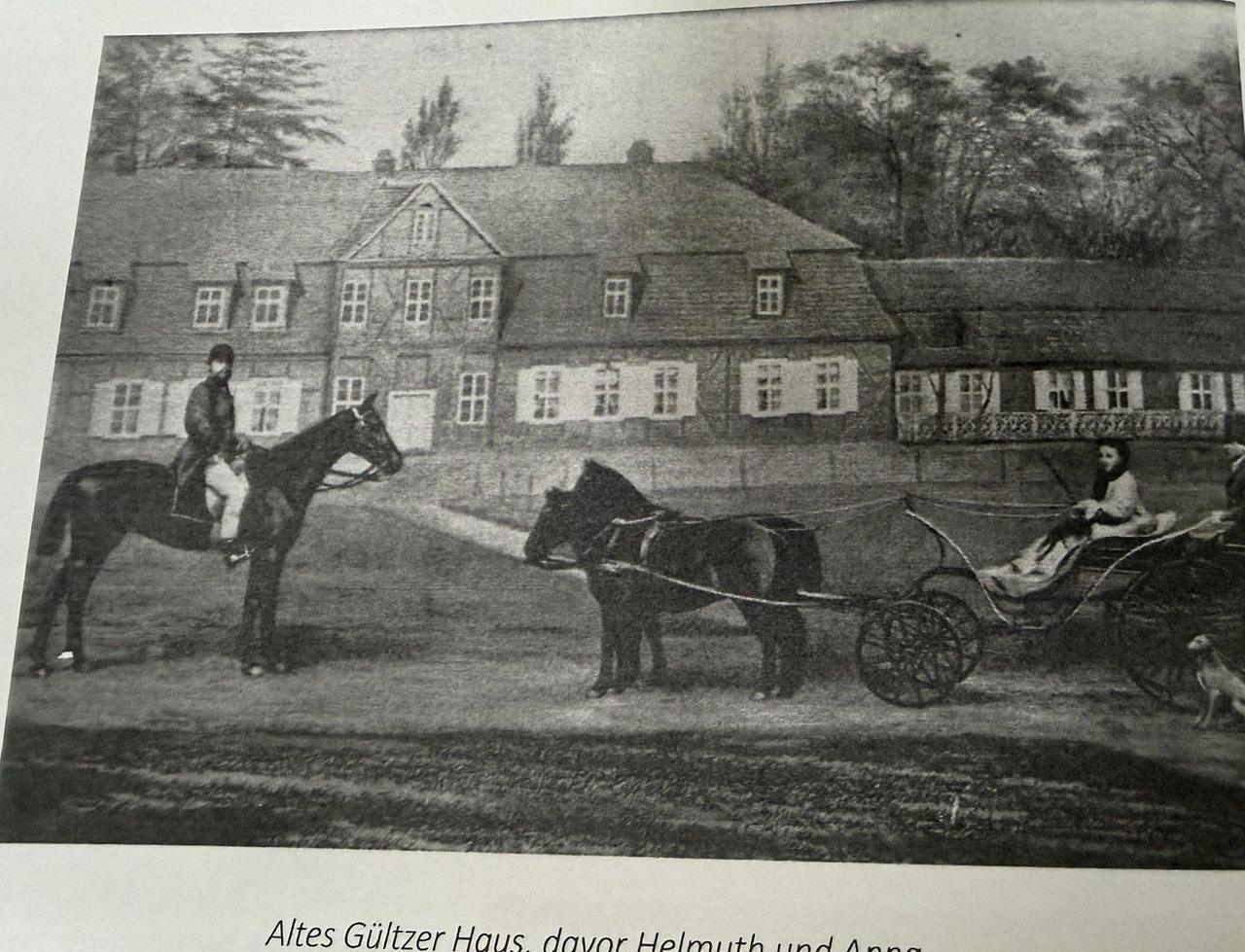
Axel was born at Gültz on 17 February 1868, still in the central section of the old half-timbered house built by his ancestor Axel Albrecht von Maltzahn (1693–1781). This central section was demolished after the new manor house was completed, to make room for the drive to the estate farmyard – which is why, when asked where he was born, Axel liked to reply: “On the high road.” In the family Bible his father wrote: “On 17 February 1868 my dear wife, by God’s gracious help, was delivered of a son, who in holy baptism received the names Axel Ludwig Julius. May the Lord God, in His grace, let him grow up to be a child of God and a brave man.” Nine godparents stood at the font, among them his great-grandparents, the Mecklenburg minister of state Louis von Lützow and Sophie von Lützow née von Brandenstein, his grandparents von Rohrscheidt, his grandmother, his aunt Agnes von Beczwarzowsky and Freiherr Rudolph von Maltzahn-Cummerow.

His first lessons were given by private tutors, among them the later Pastor Timm. Axel then went to the Katharineum in Lübeck, where he boarded with Pastor Ranke of St Mary’s Church, a close relative of the historian Leopold von Ranke. He remained friends with him all his life. While in the Sekunda (the upper middle forms) he moved to the Joachimsthal Gymnasium in Berlin, boarding with the headmaster, Professor Dr Schaper. Schaper was grand master of a Prussian Masonic lodge and an excellent teacher; his house, according to the curriculum vitae, was “worlds apart from the Ranke household”. In 1886 Axel passed his Abitur, excused from the oral examination on account of his outstanding results.
He studied law in Heidelberg for his first three semesters. Like his father, he became an active member of the Corps Vandalia there, holding the third and then the first office. He always gratefully acknowledged the influence of the Corps on his life. In Berlin he passed the first state examination in law (Referendarexamen).
One-year volunteer in Pasewalk
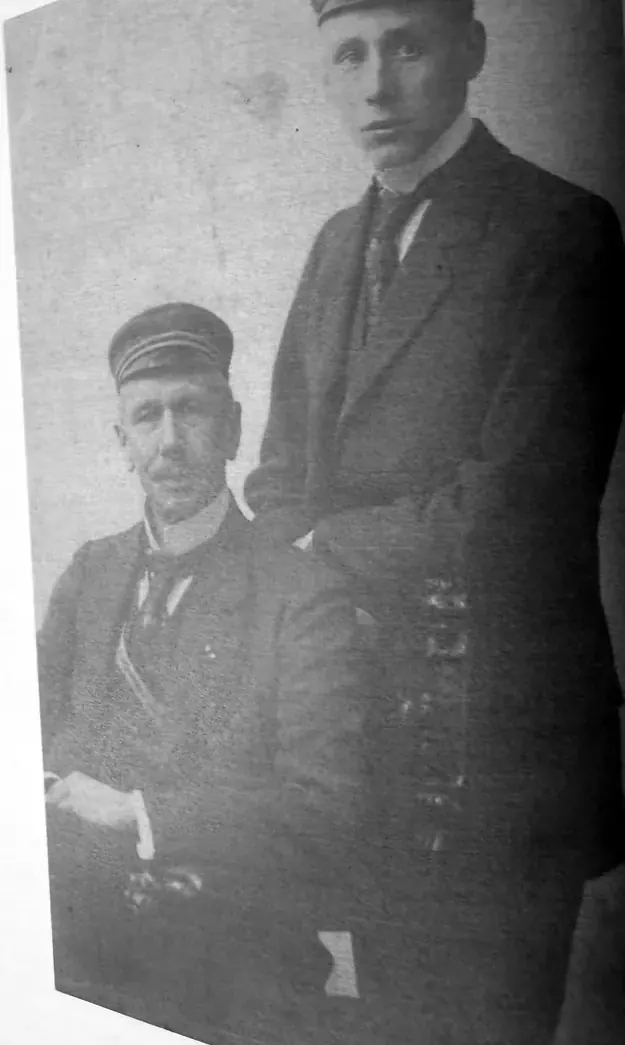
He completed his military service as a one-year volunteer with the “Königin” Cuirassier Regiment (Pomeranian) No. 2 in Pasewalk – the regiment in which his father had already served in 1866 (more on the Pasewalk cuirassiers).
In the civil service
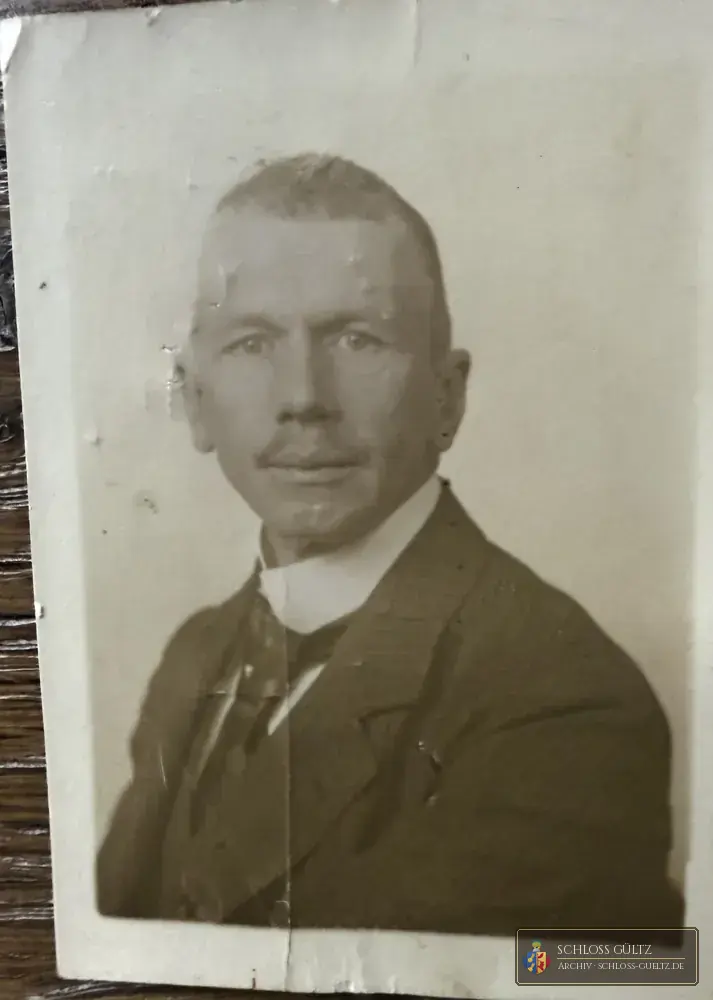
As a trainee lawyer he worked in Düsseldorf under the district administrator and later minister Freiherr von Schorlemer, whom he deputised for at times, and finally, as his father once had, at the regional government in Stettin, chiefly on matters concerning state domains. After the second state examination (Assessorexamen) he was posted to the regional government in Köslin and soon to District Administrator von Lattorff in Bergen on Rügen, whom he frequently deputised for. In 1900 he became district administrator of the district of Grimmen (acting from January 1900, permanently from September 1901). His term of office saw, among other things, the building of the harbour at Stahlbrode and the branch line to Loitz, opened in 1906 (more on the family’s railways and estates). In 1910/11 a lawsuit involving the liberal landowner Arthur Becker, who accused the district administrator of partisan conduct in office, occupied the Reichstag and the Prussian House of Representatives; according to the family’s curriculum vitae, the matter ended with the landowner Becker-Hartmannshagen being sentenced to nine months’ imprisonment; even Kladderadatsch published a caricature of the “district administrator standing by his convictions”. Axel left office in 1911. In all, he administered the district for some twelve years. There were also friendly encounters: on several occasions he met Prince Eitel Friedrich of Prussia, who came to hunt in the Abtshagen state forest.
Because the district administrator’s residence in Grimmen was still being built when he took office, the family initially lived in the manor of Herr von der Lancken-Wakenitz at Clevenow. Their eldest son was born there. The next two children were born in a small house on the Grimmen town boundary, the last three in the new district administrator’s residence next to the district office.
In 1912 he moved as Regierungsrat (senior government official) to the Oberpräsidium in Magdeburg, where the family lived at Augustastraße 26 – a particularly happy time for Axel and his wife – and shortly before the First World War, as Geheimer Oberregierungsrat and Vortragender Rat (ministerial counsellor), to the Prussian Ministry of Agriculture, Domains and Forests in Berlin. On 17 May 1898 he had married Helene-Luise von Platen of the house of Poggenhof on Rügen (more about her below). In Berlin the family lived in Südende, Bahnstraße 24.
In the First World War
When war broke out he took the field as a reserve cavalry captain (Rittmeister) commanding a light infantry ammunition column, first in the west and, after the Battle of the Marne, in Poland, and was awarded the Iron Cross. In 1915 he was recalled to the ministry, where he devoted himself above all to questions of food supply. During his war service the family moved temporarily to Gültz. At the ministry he had already been earmarked as successor to Minister von Schorlemer when the war was lost. A memento of the war years later hung in the entrance hall of the house at Gültz: a royal stag that he had shot in the imperial Russian court hunting ground of Spała (Las Potok); beneath it hung the tusks of a trophy boar from the same hunting ground.
The end of the monarchy
Axel felt the fall of the monarchy to be the heaviest blow of his life. The family’s curriculum vitae records two scenes. On the evening of 9 November 1918 a newspaper seller on Potsdamer Platz was bawling mocking verses about the Kaiser. Axel went up to him with his stick raised and shouted: “Shut your mouth!” The bystanders took his side, and the seller disappeared. Axel then resigned from the service immediately. He addressed his letter of resignation not to the new government but to his King. When the ministry was handed over to the new minister Otto Braun (SPD), at which he appeared once more at the request of his staff, he refused the hand that was offered to him. With that, his career in the Prussian civil service came to an end.
Lord of Gültz
On 1 July 1919 his father handed over to him the estates of Gültz and Hermannshöh with Marienhöhe. Axel moved with his family to Hermannshöh, living at first in the estate officials’ house and, from the autumn of 1920, in the manor house he had had built himself. On 26 October 1923 he moved to Gültz. He steered the estates through the inflation and the difficult years that followed. He particularly valued the fact that his people stood by him in the turbulent post-war years: at Gültz and Hermannshöh not a single day was lost to strikes, although work stood still on almost all the neighbouring estates.
He also took on honorary offices. He sat on the provincial synod and the church’s legal committee, and in the Order of St John he was an honorary commander and Werkmeister; in that capacity he conferred repeatedly with the Crown Princess and with the Herrenmeister, Prince Oskar of Prussia. The Kaiser appointed him curator of the Kaiser Wilhelm Children’s Home in Ahlbeck on Usedom. In this role Axel also travelled to Doorn to report. There he presented the Kaiser with two palms. The Gültz gardener had raised them from cuttings taken from the wreath sent by the Kaiser and Kaiserin on the death of Axel’s mother in 1913.
Politically he was conservative and monarchist. Like most of his people, he belonged to the Stahlhelm. According to the curriculum vitae, however, he warned urgently against Hitler’s power politics: should it ever come to fruition, he foresaw “very hard times coming for our German people and fatherland”. He did not live to see the seizure of power.
The lover of the stars
The curriculum vitae portrays an unusually versatile man. Axel had a remarkable memory: he usually needed to read a text only once to be able to repeat it almost word for word. Even in old age he could recite more than 30 of Horace’s odes in the original Latin. With his father he would sometimes converse in Greek or Latin. He was gifted at mathematics, had universities send him examination problems in higher mathematics and once proved to a professor that there was an error in his problem. His particular love was astronomy.
He played the violin, took singing lessons, painted in oils and drew in pen and ink. An ardent Wagnerian, he helped to finance the reopening of the Bayreuth Festival after the First World War and attended it several times, the last time with his children. He wrote poems and entire plays for family celebrations and owned a valuable stamp collection. A good shot, he was often fêted as king of the hunt; capercaillies from Upper Austria, red and fallow deer antlers and roe deer trophies bore witness to this.

For his 60th birthday on 17 February 1928 a little play written by Marie Franke was performed at Gültz. The actors were the seven stars of the Plough (the Great Wagon): three stars of the shaft and four wheels. They were joined by a child as the “little rider”, the small star Alcor, which sits in the sky above the shaft. The Wagon comes down from the heavens (“Little rider, make yourself small, / now we’re through the Gültz gate, one and all!”) and pays homage to the “old lover of the stars”. Mathematics gets its verse too: “3 coupled with 20 / gives the number that pays plenty, / vivat mathematica!” At the end the stars take the little rider back with them, for it is “late … for such little people”.


Farewell
Axel von Maltzahn died at Gültz on 3 March 1931 after a serious illness. On 7 March he was laid to rest in the family vault in the presence of Crown Princess Cecilie and many mourners. His eldest son Helmuth (1900–1984) later became lord of the estate – more on this in our article The last days at Gültz – 1944/45.
The farewell in March 1931

The addresses given by the Gültz pastor at the funeral survive as a copy. They were delivered in three parts: in the house for the family (Psalm 23:4 and Psalm 73:23–26), for the congregation (Revelation 14:13: “Blessed are the dead which die in the Lord”) and in the church. They paint a more personal picture than files can. Axel had lain gravely ill for four months; the address consoles the widow after “33 years” of marriage. Of his time in office it says: “12 years in Grimmen dealt his tender heart many a wound.” Then came war and revolution, and the inheritance he took up “was not easy”. “Many of you were no doubt his playmates in happy childhood days,” the pastor told the congregation. And of the end: “For he loved Gültz and the people of Gültz, and in Gültz he wished to die.” Back at home, his last days were relatively free of pain; on the last evening he opened his eyes once more and embraced his loved ones with a final look.
As lord of the manor, the pastor said, he had always acted “with the welfare of his people at heart”, often far beyond the measure of his obligations. As patron of the church he never missed a service or a meeting of the parish church council, was a member of the provincial synod and even wrote an exposition of the catechism for his children. Above all, the pastor recalled the new church bells that Axel had donated: “That was a great sacrifice for him, but he made it gladly and with joy.” One of the bells bore the inscription “O land, land, land, hear the word of the Lord” – that this admonition “fell on so many deaf ears” had pained him deeply. Just as his father had done for Utzedel in 1878 (Two Bells for Utzedel), he thus left the church a peal of bells.
In the Order of St John he was an honorary Kommendator and “Werkmeister”; when he resigned his office from his sickbed, the Herrenmeister wrote to him that his work was indispensable. The Crown Princess sent the sick man her portrait with her greetings. On his death the Demminer Tageblatt wrote: “In him the district of Demmin loses an upright man, German to the core.” He never made his peace with the Republic, the sermon said – entirely a child of his time and his class, he remained loyal to the monarchy. He had chosen the text for the funeral service in the church himself: “It is a good thing that the heart be established with grace” (Hebrews 13:9).
Helene von Maltzahn, née von Platen (1879–1942)
Helene-Luise von Platen, known in the family as “Helli”, was born on 30 January 1879 at Poggenhof on Rügen. She was the eldest of eight siblings. Her parents were Louis von Platen of Poggenhof, who died young, and Helene née von der Lancken of the house of Lanckensburg (* 24 February 1855 in Lanckensburg, † 8 October 1915 in Poggenhof; Axel himself registered her death with the registry office in Trent). Because of her beauty she was called the “Rose of Rügen” as a young girl. Axel met her while serving as an assessor in Bergen. The two were married on 17 May 1898 in the church at Schaprode. The wedding was conducted by Axel’s former host from his boarding years at school in Lübeck, Senior Pastor Ranke, who preached on Matthew 18:19–20: “For where two or three are gathered together in my name, there am I in the midst of them.” The celebration was held at Poggenhof, after which the young couple moved into a villa on the outskirts of Bergen.
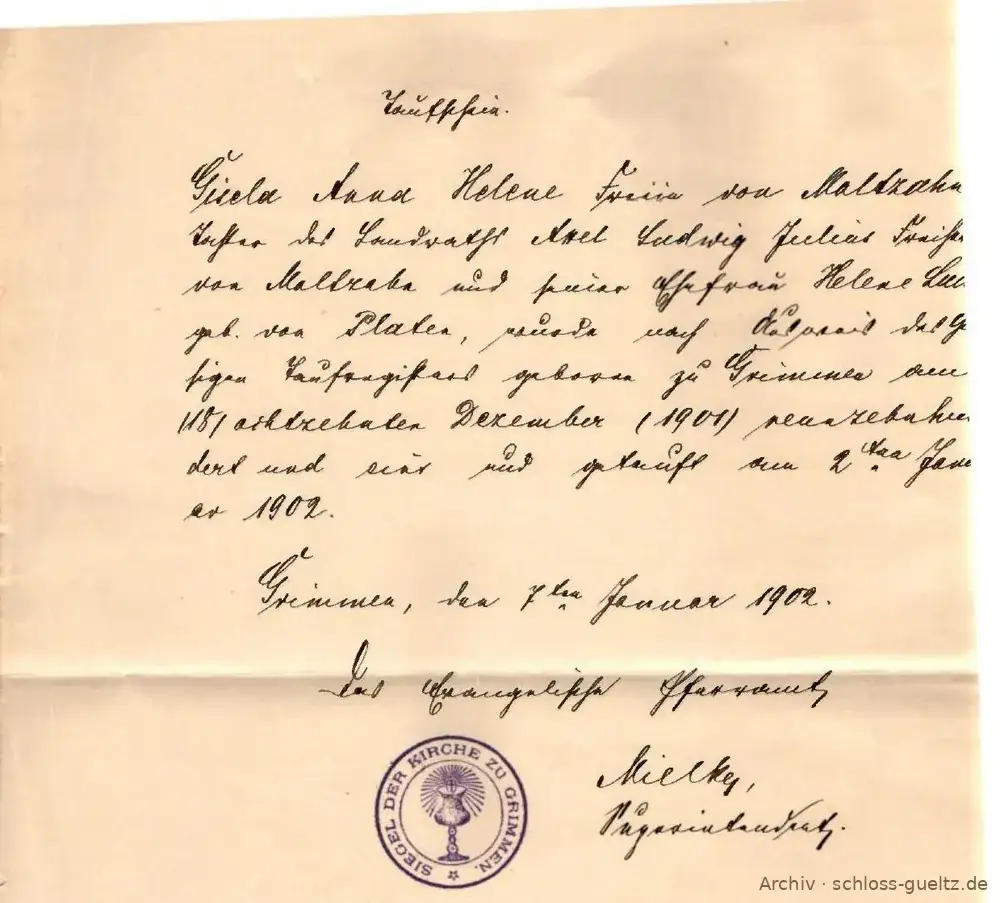

The six children were born during the Grimmen years. The second, their daughter Gisela, died on 3 January 1902, one day after her baptism and only 16 days old (the memoir says “14 days”). The marriage lasted almost 33 years and was, according to the memoir, “an exceedingly happy one”. Helene was a devout Evangelical Lutheran Christian, of great kindness and warmth, “almost always radiant” and very hard on herself. In Gültz and Hermannshöh she was “loved and revered” by the people. After Axel’s death the children renounced their inheritance, so that she became sole heir to the entire property. After Axel’s death she lived in Gültz until 1940 and then exchanged homes with her eldest son in Hermannshöh. Under a contract of 1938 this son, Helmuth, had received the estates of Gültz and Hermannshöh together with Marienhöhe; the other children were compensated in other ways. Helene died in Hermannshöh in June 1942 after a long illness (the memoir gives 13 June, a note on the funeral address 20 June, with the burial on 24 June 1942) and was laid to rest beside Axel in the family vault at Gültz.
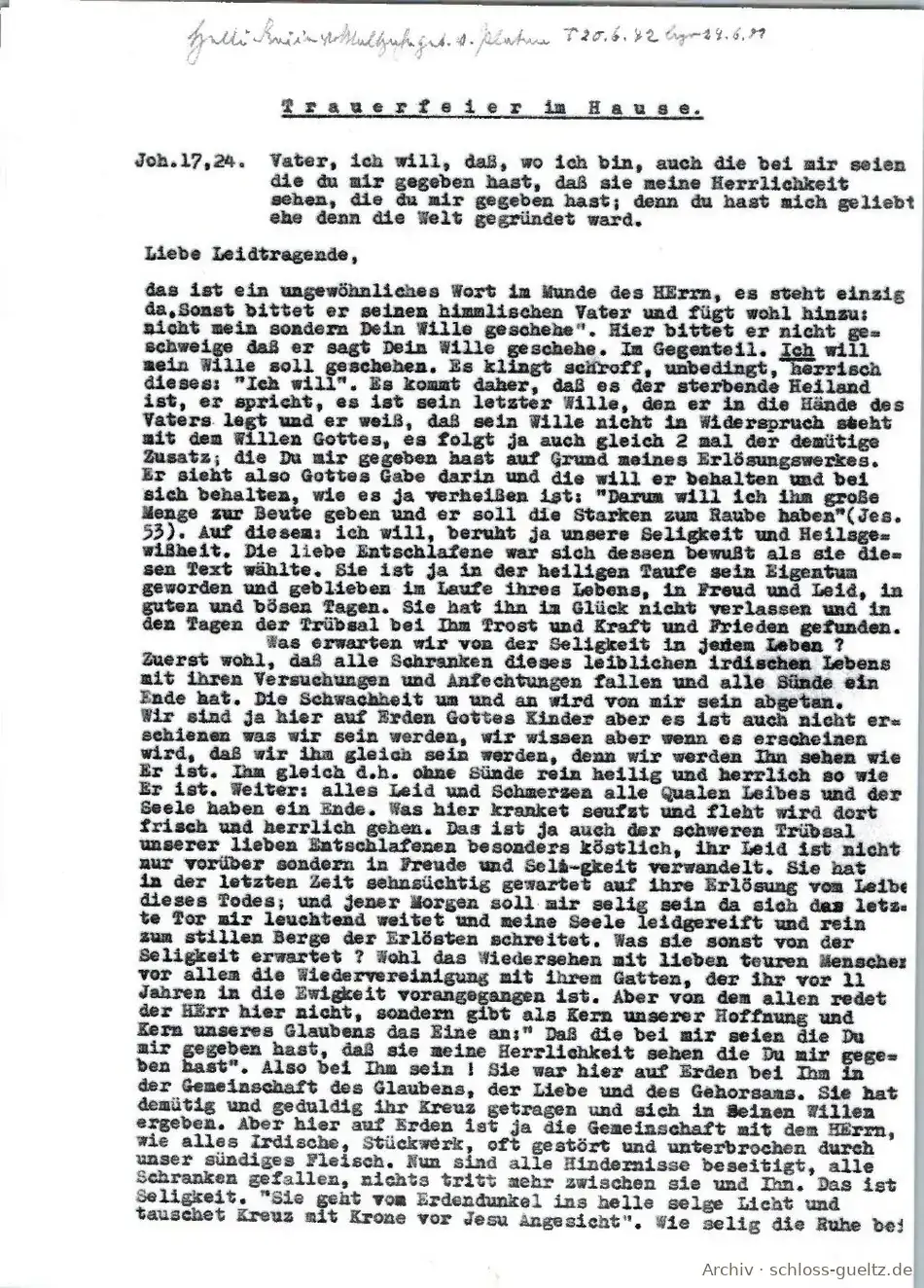
The pastor’s address at her funeral has also survived as a copy. She had chosen the Bible verses herself: John 17:24 for the service at the house (“Father, I will that they also, whom thou hast given me, be with me where I am”) and Ephesians 2:8–9 for the church (“For by grace are ye saved”). During her illness she had often asked to have the scripture readings and the hymn for the funeral read to her. The pastor recalled her happy youth “in a large circle of brothers and sisters”, her sunny family life and her hope of seeing her husband again, “who went before her into eternity 11 years ago”. Her last two years were marked by severe illness. She had cared not only for herself and her family, but had “also been a mother to her people, and we all loved her.”
Sources: Ansprachen bei der Trauerfeier für Axel Frhr. v. Maltzahn-Gültz, March 1931, typewritten copy (family collection, copy in the Archiv Schloss Gültz); Lebenslauf Axel Frhr. von Maltzahns, written by his son Helmuth Frhr. von Maltzahn (1900–1984), typescript, 7 pp. (private collection, copy in the Archiv Schloss Gültz), summarised in our own words; Marie Franke, Spiel zum 60. Geburtstag von Baron Axel v. Maltzahn (17 February 1928), typewritten copy (Archiv Schloss Gültz), short quotations; baptismal certificate of Gisela Anna Helene Freiin von Maltzahn, Ev. Pfarramt Grimmen, 7 January 1902 (Archiv Schloss Gültz); death certificate of Helene von Platen née von der Lancken, Standesamt Trent, no. 53/1915, copy Schaprode 1 January 1922 (Archiv Schloss Gültz); Ansprachen bei der Trauerfeier für Helene Freifrau von Maltzahn geb. von Platen, June 1942, typewritten copy (Archiv Schloss Gültz); Wikipedia, articles “Axel von Maltzahn (Landrat, 1868)” and “Arthur Becker (Politiker, 1862)”; Rolf Jehke, Landratsliste Kreis Grimmen (territorial.de); Lysbeth W. Muncy, Central European History 6 (1973), pp. 299–338.